
What Is Pilates? Discover 7 Absolute Benefits of This Popular Workout
What is Pilates? A low-impact fitness method that builds core strength, improves flexibility, posture, balance, and body awareness.
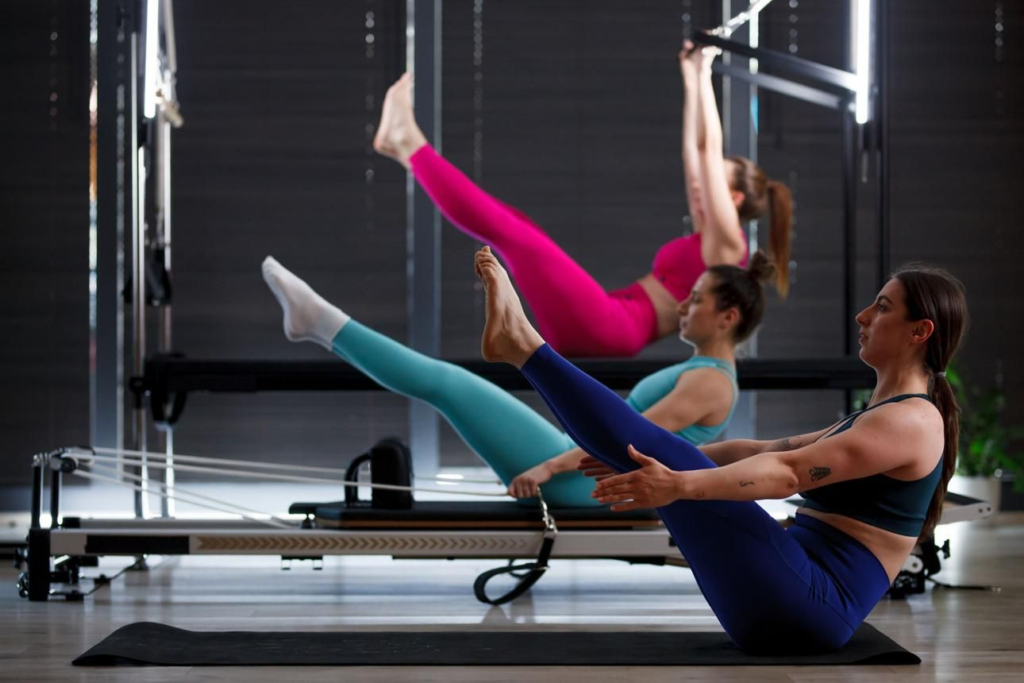
What you will learn
What is Pilates exactly? Why has it become one of the fastest-growing fitness movements in the world? And perhaps most importantly—is Pilates good for beginners?
Discover why millions of people are turning to Pilates for strength, flexibility, better posture, and a healthier lifestyle.
If you’ve spent any time scrolling through social media, browsing wellness blogs, or talking with friends about fitness lately, you’ve probably heard the word Pilates.
Whether you’re curious about taking your first class, recovering from an injury, looking for a low-impact workout, or searching for the perfect Pilates gift for someone you love, this beginner-friendly guide will walk you through everything you need to know.
Table of Contents
What Is Pilates?
Pilates is a low-impact exercise method designed to improve strength, flexibility, posture, balance, and body awareness through controlled movements and intentional breathing.
The workout was developed in the early 20th century by Joseph Pilates, who believed physical and mental health were deeply connected. Originally called “Contrology,” Pilates focused on teaching people how to move with precision, control, and efficiency.
Today, Pilates is practiced by millions of people worldwide, from professional athletes and dancers to retirees, busy parents, and complete fitness beginners.
Unlike traditional workouts that focus solely on burning calories or building muscle, Pilates emphasizes quality of movement over quantity of repetitions.
The result is a workout that strengthens the body while helping calm and focus the mind.
7 Absolute Benefits of This Popular Workout
Many beginners leave their first class surprised by how challenging it feels. They may not be gasping for air or dripping with sweat, but they often discover muscles they didn’t know existed. It’s common to feel deep muscle fatigue after exercises that appear simple on the surface.
That combination of gentle movement and deep muscular engagement is what makes it so unique. It offers a sustainable path to strength, flexibility, balance, and overall wellness without the wear and tear associated with many high-impact workouts. For people seeking a workout that supports long-term health while still delivering meaningful results, it provides the best of both worlds.
The benefits extend far beyond stronger abs.
1. Improved Core Strength
Pilates is famous for building deep core stability that supports everyday movement.
2. Better Posture
Many people spend hours sitting at desks, looking at screens, or driving. These exercises help to strengthen postural muscles and encourages healthier alignment.
3. Increased Flexibility
Combining strength and mobility work, it helps improve flexibility over time.
4. Better Balance and Coordination
Many exercises challenge stability, improving body awareness and balance.
5. Reduced Stress
The focus on breathing and concentration can have calming effects similar to mindfulness practices.
6. Enhanced Athletic Performance
Athletes often use Pilates to improve movement efficiency, mobility, and injury prevention.
7. Greater Confidence
As strength, posture, and body awareness improve, many practitioners report feeling more confident in daily life.
How Does Pilates Work?
Pilates works by targeting the body’s deep stabilizing muscles, particularly those surrounding the core.
Many people think the core only includes the abdominal muscles, but Pilates takes a much broader approach. The core is often referred to as the body’s “powerhouse” because it serves as the foundation for nearly every movement.
Your core includes:
- Abdominal muscles
- Lower back muscles
- Pelvic floor muscles
- Glutes
- Diaphragm
These muscles work together to stabilize the spine, support posture, improve balance, and create efficient movement patterns throughout the body. When one area is weak or not functioning properly, other muscles often compensate, which can contribute to discomfort, poor posture, or movement limitations.
Through slow, deliberate exercises, these muscles to work together more efficiently. Rather than relying on momentum or heavy weights, emphasizing control, alignment, and precise movement.
For example, one of the most famous Pilates exercises is The Hundred, often performed at the beginning of a workout. In this exercise, participants lift their head, shoulders, and legs while rhythmically pumping their arms and coordinating their breath. While it may look simple, The Hundred challenges the abdominal muscles, encourages deep breathing, and activates the entire core system.
Other classic exercises include:
The Roll-Up – A controlled movement that strengthens the abdominals while improving flexibility and spinal mobility.
Single-Leg Stretch – A foundational exercise that develops core stability, coordination, and control while challenging balance.
Bridge – Strengthens the glutes, hamstrings, and lower back while promoting proper pelvic alignment.
Plank Variations – Build full-body strength and endurance by engaging the core, shoulders, back, and legs simultaneously.
Swimming – Performed lying face down, this exercise strengthens the muscles along the back of the body, helping counteract the effects of prolonged sitting and poor posture.
As beginners quickly discover, Pilates isn’t about doing hundreds of repetitions or pushing through exhaustion.
It’s about learning how to engage the right muscles at the right time. The result is a stronger, more balanced body that moves with greater efficiency, stability, and confidence both inside and outside the studio.
Rather than using momentum or heavy weights, exercises focus on:
- Controlled movement
- Proper alignment
- Breath awareness
- Muscle engagement
- Balance and coordination
The goal isn’t simply to work harder—it’s to move better.
Mat Pilates vs Reformer Pilates
One of the most common questions beginners ask is:
What is the difference between Mat and Reformer ?
Mat Pilates
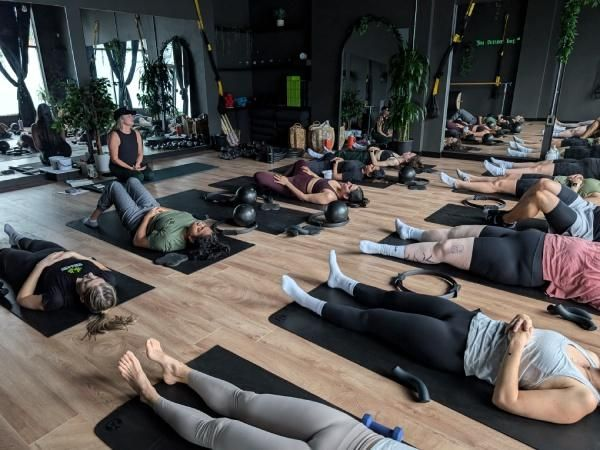
Mat Pilates is performed on a padded exercise mat using your body weight for resistance.
Classes typically include exercises that strengthen the core, improve flexibility, and build muscular endurance.
Benefits include:
- Affordable
- Accessible
- Easy to practice at home
- Minimal equipment required
- Great for beginners
Many people start with mat classes before progressing to studio equipment.
Many people assume the core only refers to the abdominal muscles—the muscles commonly associated with six-pack abs. While the abdominals are certainly important, Pilates takes a much broader and more functional approach to core strength. The core is often called the body’s “powerhouse” because it provides the stability, support, and control needed for nearly every movement we make throughout the day.
Think about simple activities such as getting out of bed, lifting groceries, walking the dog, climbing stairs, carrying a child, or sitting at a desk with good posture. All of these movements rely on a strong and coordinated core. Rather than focusing on one muscle group, the exercises train the entire system of muscles that work together to support the spine and pelvis.
Your core includes:
- Abdominal muscles
- Lower back muscles
- Pelvic floor muscles
- Glutes
- Diaphragm
These muscles function as a team. When they are properly engaged and working together, movement becomes more efficient, balance improves, and the body experiences less unnecessary strain. When one area becomes weak or inactive, other muscles often compensate, which can contribute to poor posture, stiffness, discomfort, and even injury over time.
One of the unique aspects is that it teaches people how to activate these deeper stabilizing muscles through controlled, intentional movement. Unlike some traditional workouts that emphasize speed, heavy resistance, or high repetitions, encouraging precision and awareness. The goal is not simply to move more—it’s to move better.
Breathing
Breathing plays a critical role in this process. The diaphragm, which is one of the body’s primary breathing muscles, is considered an essential part of the Pilates powerhouse. By coordinating breath with movement, practitioners learn to create stability from the inside out. This mind-body connection is one reason many people find it both physically challenging and mentally refreshing.
The Hundred
A perfect example of this philosophy is one of the most famous Pilates exercises: The Hundred. Often performed near the beginning of a class, The Hundred is considered a foundational movement. Participants lie on their backs, lift their head and shoulders off the mat, extend their legs, and rhythmically pump their arms while coordinating their breathing. The exercise is designed to warm the body, increase circulation, strengthen the deep abdominal muscles, and reinforce proper breathing patterns. Although it appears simple, many beginners are surprised by how challenging and effective it can be.
Roll-Up
Another classic exercise is the Roll-Up, which strengthens the abdominal muscles while improving spinal flexibility and body awareness. Every inch of the movement requires control, teaching participants how to articulate the spine one vertebra at a time rather than relying on momentum.
Single-Leg Stretch
The Single-Leg Stretch is another staple that develops core stability and coordination. As one leg extends away from the body while the other remains bent, the abdominal muscles must work continuously to stabilize the pelvis and maintain proper alignment.
The Bridge
The Bridge is frequently used to strengthen the glutes, hamstrings, lower back, and pelvic stabilizers. While many people think of the Bridge as a simple exercise, emphasizing proper sequencing and muscle engagement, transforming it into a powerful tool for building strength and improving posture.
Swimming
Pilates also includes exercises such as Swimming, which strengthens the muscles along the back of the body. This is particularly valuable in today’s world, where many people spend hours sitting at desks, looking down at phones, or working on computers. Strengthening the posterior chain helps create balance throughout the body and can improve overall posture and movement quality.
What Makes Pilates Unique
Even seemingly small movements require significant focus and muscle engagement. A beginner may not leave class drenched in sweat, but they often discover muscles they never knew existed.
Over time, these controlled movements help develop strength, balance, coordination, flexibility, and body awareness in ways that carry over into everyday life.
This holistic approach to core training is one of the primary reasons Pilates has become so popular among athletes, dancers, physical therapists, fitness enthusiasts, and everyday people alike.
By strengthening the body’s powerhouse, you are helping create a foundation for healthier movement, improved posture, greater confidence, and long-term physical well-being.
Reformer Pilates
Reformer uses a specialized machine called a reformer.
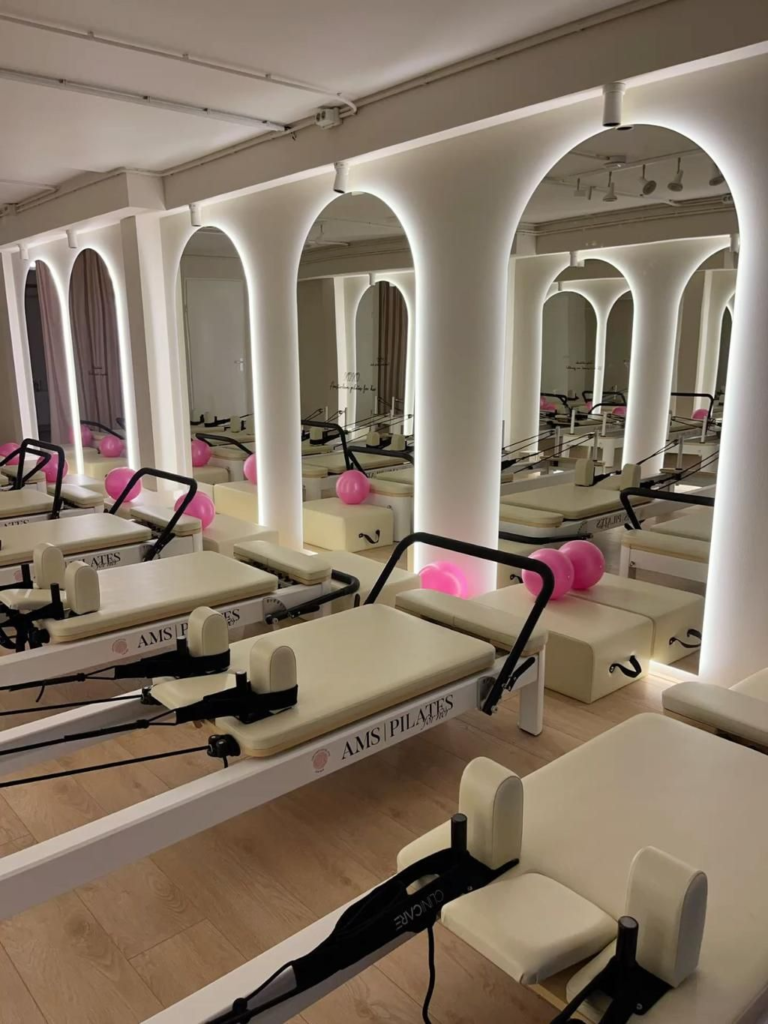
The reformer features:
- A sliding carriage
- Adjustable springs
- Straps
- Pulleys
These components create resistance while supporting proper movement patterns.
Benefits include:
- More exercise variations
- Increased resistance options
- Joint-friendly support
- Enhanced muscle activation
- Personalized adjustments
Many celebrities and professional athletes credit Reformer Pilates as part of their fitness routines.
Wellness advocates such as Gwyneth Paltrow, Jennifer Aniston, and numerous professional dancers have helped introduce Pilates to mainstream audiences over the years.
Which Is Better?
The truth is neither is better.
Mat Pilates and Reformer Pilates simply offer different experiences.
For most beginners, either option provides an excellent introduction to the Pilates method!
The Core Principles of Pilates
While classes may vary, most Pilates workouts are built around several foundational principles.
Control
Every movement is performed intentionally.
Instead of rushing through exercises, Pilates encourages precision and awareness.
Breath
Breathing is central to its practice.
Proper breathing helps activate core muscles, improve focus, and create smoother movement patterns.
Alignment
It teaches proper body positioning.
Good alignment can help improve posture and reduce unnecessary strain on joints and muscles.
Concentration
It is often described as moving meditation.
Participants focus fully on each movement, creating a stronger mind-body connection.
Flow
Exercises are designed to move smoothly from one position to the next, creating an efficient and balanced workout.
Why Is Pilates Low-Impact but Highly Effective?
One of the biggest reasons Pilates has become one of the most popular fitness methods in the world is its unique ability to deliver impressive results without placing excessive stress on the body.
In a fitness culture that often celebrates intense workouts, heavy lifting, and high-impact exercise, offering a refreshing alternative: a workout that strengthens the body while being gentle on the joints.
Unlike activities such as running, jumping, plyometrics, or high-intensity interval training (HIIT), focusing on controlled, deliberate movements that minimize impact while maximizing muscle engagement.
Rather than repeatedly pounding the joints or relying on explosive motions, emphasizing proper alignment, core activation, balance, flexibility, and precision.
This makes Pilates particularly appealing for people who:
- Are recovering from injuries
- Experience joint discomfort
- Want sustainable fitness habits
- Prefer gentle exercise options
- Need active recovery days
- Are returning to exercise after a long break
- Want to improve mobility and posture
- Are looking for a workout they can continue doing throughout their lives
One common misconception is that low-impact means easy.
In reality, it can be incredibly challenging. Instead of relying on heavy weights or fast-paced movements to create intensity, Pilates challenges the body through control, stability, and time under tension.
For example, holding a simple position for an extended period can activate deep stabilizing muscles that are often overlooked in traditional workouts. These muscles play a critical role in supporting the spine, improving posture, and creating efficient movement patterns.
Because many people rarely engage these muscles intentionally, it often feels surprisingly difficult—even for experienced athletes.
The secret lies in the quality of movement. In many forms of exercise, momentum helps carry the body through a movement. In Pilates, momentum is minimized.
Every repetition is performed with purpose and control, forcing muscles to remain engaged throughout the entire exercise. This constant engagement helps build functional strength that translates into everyday activities.
Muscular Endurance
Pilates is also known for developing muscular endurance.
Rather than focusing solely on how much weight you can lift, it trains muscles to work efficiently for longer periods of time. This can improve posture, reduce fatigue during daily activities, and help the body move more comfortably throughout the day.
Another reason that it is so effective is that it works multiple muscle groups simultaneously. A single exercise may challenge the core, glutes, back, shoulders, and legs all at once.
This integrated approach helps create balanced strength throughout the body rather than overdeveloping one area while neglecting another.
Proper Alignment
The emphasis on proper alignment also contributes to Pilates’ effectiveness. Many people spend hours sitting at desks, driving, or looking down at screens, which can lead to poor posture and muscle imbalances. Pilates helps retrain the body to move more efficiently, strengthening underused muscles while improving flexibility in areas that have become tight from modern lifestyles.
Beyond the physical benefits, Pilates encourages a strong mind-body connection. Practitioners learn to focus on breathing, posture, and movement quality rather than simply completing repetitions. This heightened awareness often leads to better movement habits both inside and outside the studio.
Is Pilates Good for Beginners?
Absolutely.
In fact, Pilates is one of the most beginner-friendly exercise methods available.
Because exercises can be modified for different fitness levels, this type of exercise welcomes:
- Complete beginners
- Older adults
- Active individuals
- New exercisers
- Post-rehabilitation clients
- People returning to fitness after a long break
You do not need to be flexible.
You do not need to be athletic.
You do not need prior workout experience.
Everyone starts somewhere.
Why Pilates Became a Global Wellness Trend
Pilates sits at the intersection of fitness, wellness, and self-care.
Modern consumers increasingly want exercise that supports long-term health rather than extreme physical exhaustion.
Pilates aligns perfectly with that shift.
It offers:
- Strength without punishment
- Movement without impact
- Fitness without intimidation
- Wellness without complexity
Social media has also accelerated Pilates popularity, introducing younger generations to the practice through influencers, instructors, and wellness creators.
Today, Pilates studios are opening across the globe, and demand continues to grow.
What to Expect in Your First Pilates Class
Feeling nervous before your first class is completely normal.
Most beginner classes include:
- Gentle warm-up movements
- Breathing instruction
- Core activation exercises
- Strength-focused sequences
- Stretching and cool-down
Wear comfortable clothing that allows movement.
Bring water.
Arrive a few minutes early.
Most importantly, remember that nobody expects perfection.
Pilates is a practice, not a performance.
Perfect Pilates Gifts for Beginners and Enthusiasts
Looking for a thoughtful gift for someone who loves Pilates?
These practical and wellness-focused ideas are always appreciated.
Pilates Starter Kit
A quality mat, resistance band, and grip socks make a fantastic beginner gift.
Pilates Studio Gift Card
Perfect for someone interested in trying classes for the first time.
Pilates Water Bottle
Hydration is essential before and after workouts.
Recovery and Self-Care Bundle
Foam rollers, massage balls, and stretching tools support recovery.
Pilates Journal
A wellness journal can help track goals, progress, and personal achievements.
Pilates Apparel
Comfortable leggings, tanks, and studio socks are always useful.
Thoughtful fitness gifts show support for someone’s wellness journey—and often encourage healthy habits that last for years.
So, what is Pilates?
It’s more than just a workout.
Pilates is a movement practice that builds strength, improves flexibility, enhances posture, reduces stress, and creates a stronger connection between mind and body.
Whether you’re a complete beginner, recovering from injury, looking for a sustainable fitness routine, or shopping for the perfect Pilates gift, it offers something for nearly everyone.
The best part?
You don’t have to be an athlete to begin.
You simply have to start.
And one controlled breath, one intentional movement, and one class at a time, you’ll discover why Pilates has become one of the world’s most beloved wellness practices.
Other Stories You Might Like
- Mental Health Benefits of Pilates
- Best Pilates Gifts for Beginners
- Mat Pilates vs Reformer Pilates: Which Is Better?
- 15 Pilates Accessories Worth Buying
- Best Grip Socks for Pilates Studios
- Pilates Gifts Under $50
- Pilates Studio Essentials Checklist
Check out our other websites